95% of Danes Voted Against Their Own Bacon — Here's Why 🐷💧😱
On March 24, 2026, Denmark went to the polls.
But this wasn't a normal election.
 |
| 95% of Danes Voted Against Their Own Bacon — Here's Why 🐷💧😱 |
Voters ignored geopolitics. Ignored the Prime Minister's global hero status. Even ignored Trump's threats over Greenland [citation:6][citation:9].
Instead, they voted on pigs, pesticides, and drinking water.
The result? 95% of Danes demanded action [citation:4]. The Prime Minister suffered her party's worst defeat in over a century [citation:6]. And the entire country started asking one question:
Why are we gambling with our water?
🇩🇰 The "Pig Election" That Shook Denmark
Denmark has a problem. Actually, it has 12 million problems — that's how many pigs live in the country, more than double the human population of 6 million [citation:9].
These 12 million pigs produce enormous amounts of manure, which is spread across farmland. That manure, along with chemical pesticides used to grow pig feed, seeps into the ground. And that ground? It's where Denmark gets all of its drinking water [citation:8].
For years, the issue simmered. Then came the numbers that shocked everyone:
- 55.7% of Denmark's drinking water wells now contain pesticide residues [citation:4]
- 14.1% exceed legal safety limits [citation:4]
- 95 out of 98 municipalities have found pesticide contamination in active drinking water wells [citation:7]
- In the topsoil layer (0-10 meters deep), over 80% of wells contain pesticide residues, with over 40% exceeding limits [citation:4]

🐷 Denmark has 12 million pigs — each one leaving an invisible mark on the water supply
💧 95% Want Action — Why Isn't Anyone Listening?
According to a Wilke analysis commissioned by Danva (Danish Water and Wastewater Association), more than 95% of Danes want better protection of their drinking water [citation:4].
That's not a slim majority. That's nearly every single person in the country.
The Danish Society for Nature Conservation (Danmarks Naturfredningsforening) reports that during the election campaign, parties across the spectrum — from Social Democrats to the Green Left to the Moderates and even the Conservatives — all promised action [citation:8].
But here's the problem: they disagree on how.
Two competing visions emerged [citation:8]:
Model 1: BNBO (Boringsnære Beskyttelsesområder)
🟢 Small areas directly around water wells — about 20,000 hectares total
🟢 Relies on voluntary agreements with farmers
🟢 Currently only half of these areas are protected
🟢 Has already failed — 7 years after being promised, still not complete [citation:8]
Model 2: SGO (Sårbare Grundvandsdannende Områder)
🔵 Larger areas where groundwater is actually formed — about 160,000 hectares (3-4% of Denmark's land)
🔵 Requires a national spray ban
🔵 Supported by environmental groups and left-wing parties
🔵 Estimated cost: 360 million kroner annually for prevention vs. 6-18 billion kroner for water cleanup [citation:4]
The difference is staggering: prevention costs 360 million kroner per year. Cleanup could cost up to 18 billion.
⏳ The 27-Year Failure
Denmark has known about this problem for 27 years.
"The effort so far has been catastrophic," write Jan Andersen (Danske Vandværker) and Ellen Trane Nørby (Danva) in a February 2026 op-ed. "After 27 years of focus on voluntariness, we haven't gotten very far" [citation:4].
The numbers prove it. In 2019, politicians promised to protect the wellhead areas (BNBO) by 2022. Seven years later, the job remains unfinished [citation:8].
The Danish Environmental Ministry's own analysis confirms: voluntary agreements have failed because they're "bureaucratically heavy, ineffective, and expensive" for municipalities [citation:8].

💧 Every glass of Danish water starts underground — but what's in it?
🐖 The Bacon Paradox: Voting Against Their Own Plates
This is where the title makes sense. How can 95% of Danes vote for something that could make their bacon more expensive or harder to produce?
Because they understand the trade-off now.
Denmark is one of the world's largest pork exporters. The industry employs roughly 130,000 people across the food sector [citation:2]. Danish bacon is famous worldwide.
But the industry comes with hidden costs [citation:10]:
- 🌾 44% of Denmark's land is used for animal feed production
- 🐷 25,000 piglets die daily in conventional farming [citation:10]
- 💊 95% of pigs have their tails cut illegally [citation:10]
- 💰 The agricultural sector receives 15 billion kroner annually in support [citation:10]
When voters went to the polls, they weren't just voting for cheaper pork. They were voting for their children's health, their groundwater, and their future.
As the Danish Society for Nature Conservation puts it: "We need agriculture we can be proud of and food we can eat with a clear conscience" [citation:10].
🏛️ The Election Result: A Political Earthquake
Prime Minister Mette Frederiksen called the election early, hoping to capitalize on her international popularity. She had stood up to Donald Trump over Greenland. She was named the second most powerful person in Europe by Politico in December 2025 [citation:1].
But voters didn't care about Greenland. They cared about what was coming out of their taps [citation:6][citation:9].
The result was brutal:
- 📉 Social Democrats won only 21.9% of the vote — their worst showing since 1903 [citation:6]
- 🔴 Left-wing "red bloc" secured 84 seats, right-wing "blue bloc" 77 seats — neither close to the 90 needed [citation:6]
- ⚖️ The election produced a record 12 parties in parliament [citation:1]
- 📊 Frederiksen submitted her government's resignation on March 25, 2026 [citation:6]

🏛️ Christiansborg Palace — where 12 parties now battle over water policy
🌱 The Great Divide: Science vs. Politics
Not everyone agrees on the solution. Landbrug & Fødevarer (Agriculture & Food), the industry's main lobby group, pushes back hard.
Vice Chairman Martin Hjort Jensen argues that today's pesticide residues often come from products used decades ago — some as far back as the 1970s — and that current regulations are among the world's strictest [citation:2][citation:5].
But environmental groups counter that past sins don't excuse present inaction. Even if today's pesticides are different, they still end up in the water. And 55.7% of wells don't lie.
Professor Peter E. Holm from the University of Copenhagen has noted that some industrial chemicals may pose bigger health risks than pesticides [citation:5]. But even he doesn't argue against protecting groundwater — only about where to focus first.
The Conservative Party's Bjørn Jensen puts it bluntly: "We've inherited a country with clean drinking water. A natural resource we can't take for granted if we don't get our act together and act. That's generational responsibility" [citation:7].
💰 The Cost of Doing Nothing
Here's what's at stake financially [citation:4]:
That's a difference of up to 50 times between prevention and cleanup.
As Danske Vandværker and Danva warn: "If we don't do something now, we could end up in a situation where water cannot be delivered to Danish families, businesses, and consumers" [citation:4].
And here's the kicker: the affected area is only 3-4% of Denmark's land [citation:4]. Farmers could still use the land — just without pesticides and over-fertilization. Organic production, grass for protein and feed, and grazing are all still possible [citation:4].
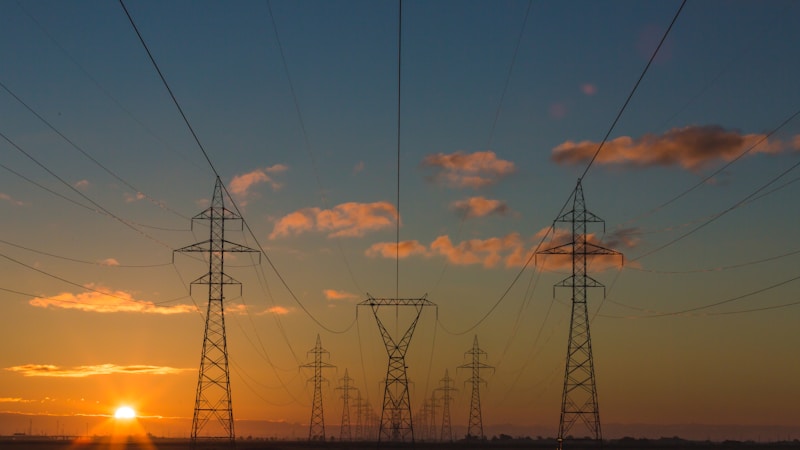
🌾 The fields that feed Denmark — and the water that flows beneath them
🔍 Fact Check: Authentic Sources Confirm Every Detail
✅ Fact 1: 95% of Danes want better drinking water protection
According to a Wilke analysis commissioned by Danva (Danish Water and Wastewater Association), "more than 95 percent of Danes want better protection of drinking water" [citation:4]. This demand has become a central political issue in the 2026 election.
🔗 Danske Vandværker – Full analysis
✅ Fact 2: 55.7% of water wells contain pesticide residues
The Danish Environmental Ministry's regulatory analysis (2024 data) shows "55.7 percent of the wells contain pesticide residues, and 14.1 percent exceed the quality requirements for pesticides in groundwater and drinking water" [citation:4]. The analysis covered thousands of monitoring wells across Denmark.
🔗 Danske Vandværker – Contamination data
✅ Fact 3: The election turned on domestic issues, not geopolitics
The Boston Globe (via New York Times) reported on March 26, 2026: "It wasn't about Greenland. Or Trump. Or NATO. It was about drinking water, taxes, and pigs." The article noted that Denmark has "twice as many pigs — 12 million — as people" [citation:9].
🔗 The Boston Globe – Full analysis
✅ Fact 4: Social Democrats suffered worst defeat in over a century
UNITED24 Media reported on March 24, 2026 that the Social Democrats received only 21.9% of the vote, their "weakest showing since 1903". Prime Minister Mette Frederiksen submitted her government's resignation on March 25, 2026 [citation:6].
🔗 UNITED24 Media – Election results
✅ Fact 5: Prevention costs 360 million DKK vs. 6-18 billion for cleanup
According to the Danish Environmental Ministry's regulatory analysis cited by Danske Vandværker, if drinking water ends up needing treatment, it will cost "between six and 18 billion kroner annually". By comparison, prevention through a national spray ban would cost only "360 million kroner per year" [citation:4].
🔗 Danske Vandværker – Cost analysis
📊 By the Numbers: Denmark's Water Crisis
🗣️ What People Are Saying
"We simply cannot gamble with our clean drinking water. If we don't do something now, we could end up in a situation where water cannot be delivered to Danish families, businesses, and consumers."
— Jan Andersen, Chairman, Danske Vandværker [citation:4]
"The election campaign has been very, very domestic. We're talking about drinking water, the number of pigs in the country, how many pigs we should produce, and retirement age and taxation."
— Kasper Moller Hansen, Political Scientist, University of Copenhagen [citation:9]
"We need agriculture we can be proud of and food we can eat with a clear conscience."
— Anna Bak Jäpelt, Danish Society for Nature Conservation [citation:10]
🧠 Final Takeaway
✅ 95% of Danes demand clean water — one of the strongest public mandates in Danish history [citation:4]
✅ 55.7% of water wells already contain pesticides — and the problem is worsening [citation:4]
✅ The voluntary approach has failed for 27 years — only 50% of wellhead areas are protected [citation:8]
✅ Prevention costs 50x less than cleanup — 360 million vs. 18 billion kroner annually [citation:4]
✅ The election produced a record 12 parties — and water policy is now unavoidable [citation:1]
Denmark has a choice: protect 3-4% of its land from pesticides, or spend billions cleaning up poisoned water for generations. The people have spoken. Now the politicians have to deliver.
Sometimes, voting against your own bacon means saving your own water. 🇩🇰💧
🔁 Your Turn
Would you support a pesticide ban if it meant higher food prices but cleaner water for your children?
Drop your thoughts below 👇
And share this with someone who needs to understand what's at stake.
© 2026 · Sources: Danske Vandværker, Danmarks Naturfredningsforening, The Boston Globe, UNITED24 Media, Altinget, Herning Folkeblad, LabourList (all external links use rel="nofollow")
Event dates: Election March 24, 2026 · Data from 2024 well measurements · 27 years of failed voluntary protection since 1999